
Copyright © PSALMUS HUMANUS Association for Arts Education, 2002–2024.

PSALMUS HUMANUS
Association for Arts Education


Supporting by:

Updated: 23 Oct 2026.

Ministry of
Human Capacities
Hungarian
Academy of Arts

LEADERSHIP
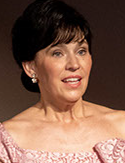 Yvette BARÁTH
I am Yvette Baráth, a singing and solfège teacher, choir conductor and performer. The guiding principle of my teaching is freedom in singing: helping students develop natural, effortless vocal production and their own musical expression. I believe that my experience in teaching solo singing can contribute to the musical education of children aged 6–10 primarily through the teacher’s own singing as a model, children’s learning through imitation, and the development of musical taste.
What makes solo singing distinctive is that the singer is the instrument. This places a particular responsibility on the teacher: a student’s development is strongly influenced by the teacher’s expectations of vocal sound and musical taste. I believe that teaching should preserve each student’s individual vocal timbre and help everyone discover their own voice.
Imagination, vivid mental imagery and learning through experience therefore play an essential role in my approach. With the teacher’s guidance, students explore and learn to recognise the sensation of singing with greater ease and freedom. Technical progress and a growing sense of personal freedom go hand in hand: as difficulties ease, students can express themselves more confidently and sincerely. This requires patience, trust and an attentive teacher who is also sensitive to their emotional state. A singing lesson can thus become an encounter that supports personal development as well.
In my view, the most important foundation for children aged 6–10 is the example of a teacher who sings beautifully, correctly and naturally, since young children learn primarily through imitation. For this reason, I attach particular importance to vocal training for those who teach singing, conduct choirs or teach solfège. Teachers can develop sound vocal technique without needing the vocal gifts of a soloist. A teacher’s voice influences the singing of many children every day.
Alongside differences in prior musical experience, lack of confidence in singing and fear of singing in front of others, we must also pay attention to the musical examples children encounter. In lower primary school lessons, imitating short melodies, playing singing games and singing together can provide opportunities to lay the foundations for natural voice use. I aim to create an accepting atmosphere in which children feel confident enough to try, listen to their own voices and those of their peers, and experience singing as a joyful activity.